
Coloring Books for Dementia: What to Look For (and What to Avoid)
By K. Terry, author of fourteen bold & easy coloring books
A good coloring book for someone with dementia has thick outlines and large open shapes, but keeps the subject matter fully adult. Familiar scenes like kitchens, gardens, sewing rooms and backyard birds work far better than cartoon characters or children's themes.
Featured in this article
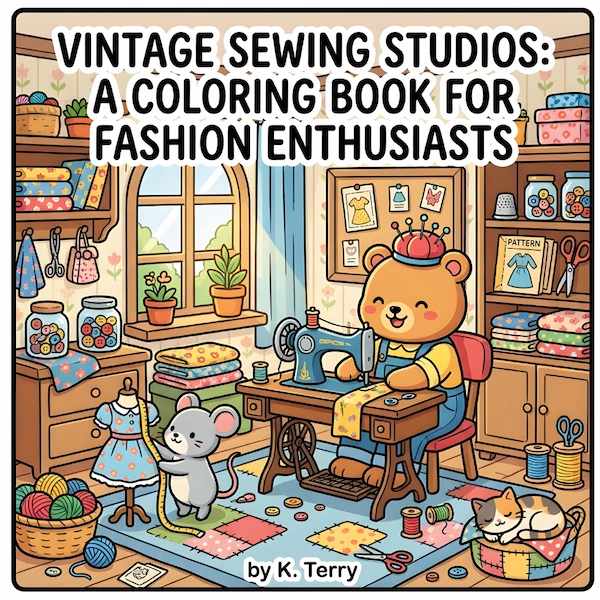
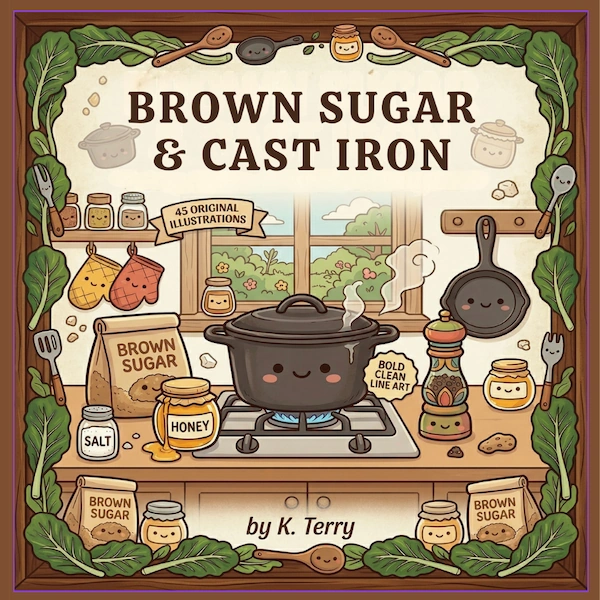
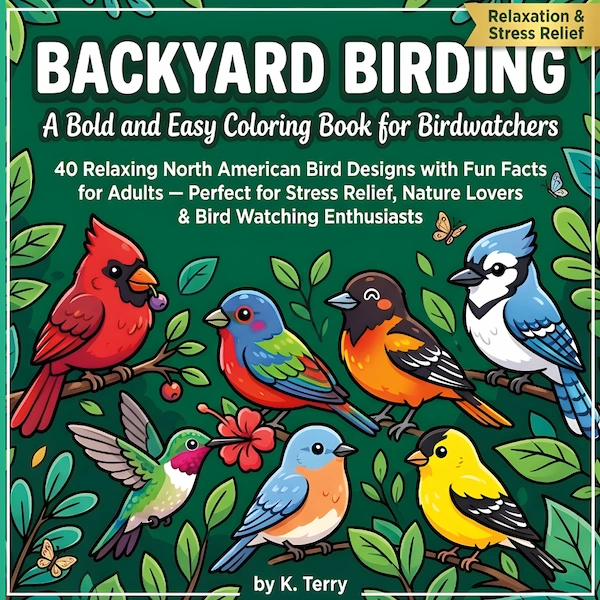
If you have gone looking for a coloring book for someone with dementia, you already know how that trip goes. The adult coloring section is full of mandalas so fine they need reading glasses and a steady hand. The only other option is the children’s aisle. Neither one is right, and the second one can quietly do damage.
Start with dignity, not difficulty
The Alzheimer’s Association’s guidance on art activities is brief, and one line of it does most of the work: “Keep the project on an adult level. Avoid anything that might be demeaning or seem childlike.”
That single sentence explains why the kids’ aisle fails. The lines are the right thickness. The shapes are the right size. But handing a woman who ran a household for forty years a page of grinning dinosaurs says something to her about how she is seen now, and she will feel it whether or not she can put it into words.
So what you need is a book that is easy on the hands and adult to the eye. Those two qualities are almost always sold separately, which is the entire reason I started printing bold and easy books in the first place.
Why the bold and easy format fits
Thick outlines and wide-open shapes remove the two things that make coloring stressful. There is nothing to squint at, and there is no precision to maintain. You can fill a whole shape with a few passes of a marker and it looks finished.
That last part matters more than it sounds. A page that can actually be completed gives back a sense of accomplishment, which the Alzheimer’s Association names as one of the real benefits of art for people with dementia. An intricate page that gets abandoned halfway does the opposite.
The same design choices that help seniors and anyone with low vision are doing the work here too: less eye strain, less grip pressure, no wrong answers.
Pick subjects that start a conversation
This is the part most guides skip, and I think it is the most important one.
The book is not only something to color. It is something to talk about while you color, and that gives you a reason to sit at the table together for an hour without needing to fill the silence yourself. Abstract patterns give you nothing to say. A cast iron skillet on a stove does. So does a sewing machine with a spool of thread beside it, or a cardinal at a feeder.
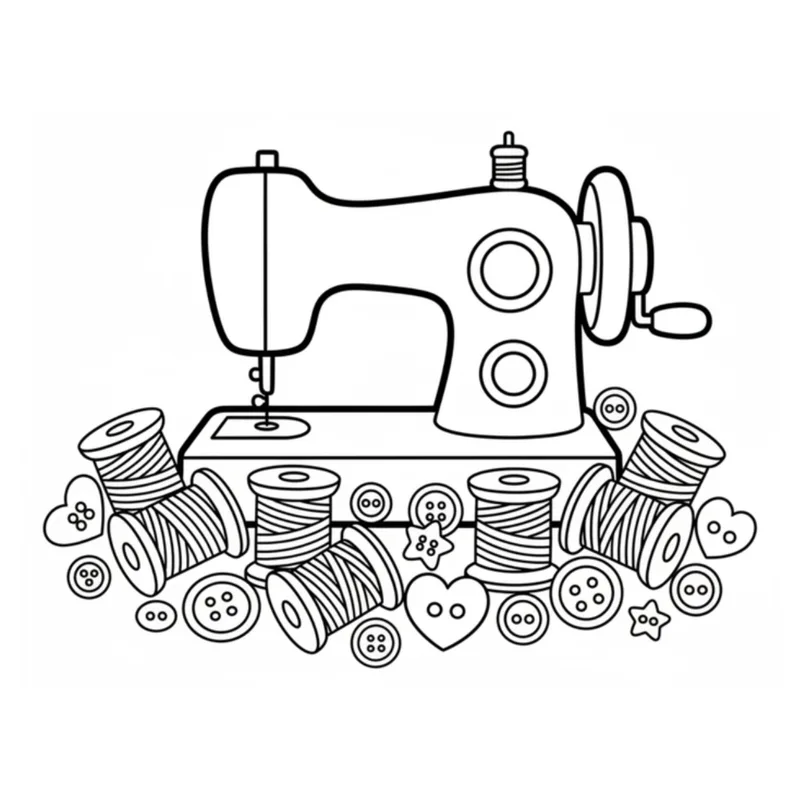
Familiar domestic scenes give the person something to recognize and something to tell you about. Brown Sugar & Cast Iron is full of kitchens for exactly this reason, and Vintage Sewing Studios tends to land with women who sewed. Backyard Birding has a fact printed in large type beside each bird, which turns out to be a useful thing to read aloud when you have run out of things to say.
The practical details
A few things are worth checking before you buy.
Single-sided pages. If markers are involved, and they should be, a double-sided book ruins the design underneath. Every book I print is single-sided with a black backing page behind the artwork, which is the whole reason we do it that way.
Tear-out potential. A finished page taped to the fridge or slipped into a frame is worth far more than a finished page buried in a book nobody opens again.
Size. An 8.5 x 8.5 inch book sits comfortably on a lap or a wheelchair tray. Anything bigger needs a proper table.
What coloring can and cannot do
I want to be straight with you, because there is a lot of overreach in this corner of the internet.
Coloring is not a treatment. It will not slow the disease down and no one should sell it to you as though it might. What the Alzheimer’s Association actually says is that art gives people a way to express themselves and a sense of purpose, which is a smaller and more honest claim.
Here is what it can realistically do. It can fill an afternoon without frustration. It can give you both something to do with your hands so that talking becomes optional. It can produce an object at the end that somebody made on purpose.
Some days it will not work at all. The Association’s own advice is that a project does not need to be finished in one sitting, and I would go further than that: some days you put the markers away after four minutes and that is a perfectly good outcome. Leave the book on the table. Try again Thursday.
A note for caregivers
If you are the one reading this at eleven at night, looking for something, anything, that the two of you can still do together, then I hope this helps you skip the wasted trip to the store.
Get the thick lines. Get an adult subject. Sit down next to them and color a page yourself while you’re at it.
One last practical note. If you want something for tomorrow morning rather than next week, every book we make is also sold as a printable PDF. You print the pages you want at home, and if they settle on one page they like and want to do it again on Thursday, you simply print it again.
Frequently Asked Questions
Can I just buy a children's coloring book instead?
The lines will be the right thickness, but the subject matter is the problem. The Alzheimer's Association specifically advises keeping activities on an adult level and avoiding anything that might seem childlike. A book of cartoon animals can read as condescending even to someone who cannot explain why it bothers them.
What stage of dementia is coloring suitable for?
The Alzheimer's Association notes that art activities work particularly well in the middle to late stages, when words get harder but the desire to make something does not go away. Earlier on, you may find a book with more detail is still enjoyable.
Are markers or colored pencils better?
Markers, in most cases. Colored pencils need real grip pressure to lay down color, which is uncomfortable for arthritic hands. A chisel-tip marker fills a large shape in two or three strokes with almost no force.
What if they color outside the lines or use unusual colors?
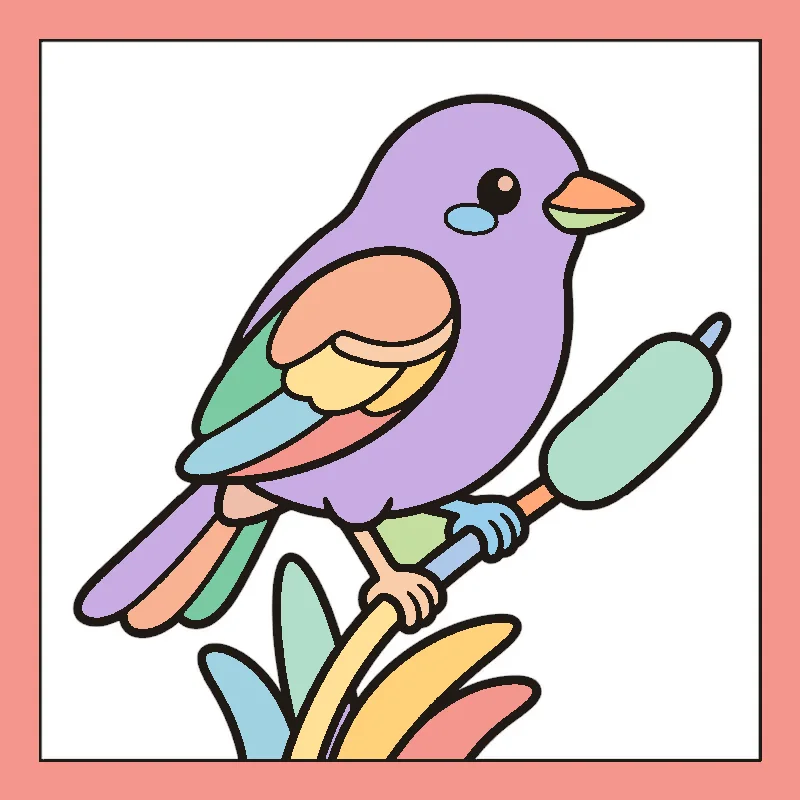
Let it be. A purple cardinal is a finished page, and correcting it turns a pleasant hour into a test. The point is the doing, not the accuracy.
Books Made for Grown-Ups
Every book we print uses thick outlines, large shapes and single-sided pages, with subjects worth talking about.
Browse the Books